If you need 24/7 access in a hospital or clinic, compact vending is often the better fit for tight spaces. From what I found, full-size machines can use about 9–12 sq. ft. once service clearance is included, while compact units can cut that space by about half or use no floor space at all if they sit on a counter.
Here’s the short version:
- Space is the main factor. The article does not show hard data on usage, wait times, or user satisfaction.
- Compact units fit more places. They work in small break rooms, corridors, nurse stations, waiting areas, and reception counters.
- Placement matters. A small machine can still cause problems if it blocks hallways or cuts into ADA clearance.
- Closer access can reduce extra walking. Putting vending near care units may mean shorter trips and less hallway crowding than sending staff to a cafeteria or lobby.
- Different formats serve different spots. The article covers full-size machines, slim combo units, smart coolers, and tabletop units.
- How vending machines work, including remote stock tracking and cashless payment, can help staff avoid manual checks and keep service simple.
If I were reviewing vending for a healthcare site, I’d focus on footprint, placement, ADA clearance, and distance from staff work areas before anything else.
| Format | Space Use | Best Fit |
|---|---|---|
| Full-size machine | About 9–12 sq. ft. with clearance | Cafeterias, large lounges |
| Compact/slim combo | About half the footprint of full-size | Small break rooms, corridors |
| Smart cooler | Small floor footprint | Nurse stations, waiting areas |
| Tabletop unit | 0 dedicated floor space | Reception, offices, small clinics |
So the core point is simple: when hard access data is limited, space and placement become the clearest way to judge whether compact vending makes sense in healthcare.
What the Evidence Shows About Vending Access in Healthcare
24/7 Access for Staff, Patients, and Visitors
The provided sources do not report usage, wait-time, or off-hours access data for healthcare vending. Because of that, space-use evidence is the more useful lens for facility planning.
Usage, Satisfaction, and Product Mix Findings
The sources also do not include measurable satisfaction or product-mix findings. So, no clear link can be made between those factors and actual use.
Medical and Pharmacy Vending Results
The provided sources do not include verifiable outcomes for pharmacy vending or automated dispensing systems.
Since access metrics are limited, footprint and placement data provide the clearest basis for decision-making. The next section focuses on how compact formats improve layout and footprint efficiency.
sbb-itb-aa27f9f
How Compact Vending Improves Space Use
Compact vs. Full-Size Vending Machines for Healthcare Facilities
Compact Formats and Where They Fit
Compact vending works in places where full-size machines just don’t make sense. That includes narrow corridors, small break rooms, nurse stations, and counters.
Here’s how those formats usually fit into a healthcare setting:
- Slim combo machines work well in corridors and break rooms.
- Compact smart coolers fit nurse stations and waiting areas.
- Tabletop units use counter space in offices and reception areas.
Clearance, ADA, and Facility Layout Factors
Placement matters. A poorly placed machine can block hallways, slow foot traffic, and create friction in busy care areas.
Facility planning should account for ADA requirements and hallway clearance so compact vending doesn’t get in the way of movement through active clinical spaces. In many cases, the best spots are underused areas like hallway ends or small alcoves, along with locations that don’t interrupt normal traffic flow.
When placement is handled well, the payoff is simple: less congestion and shorter trips for staff.
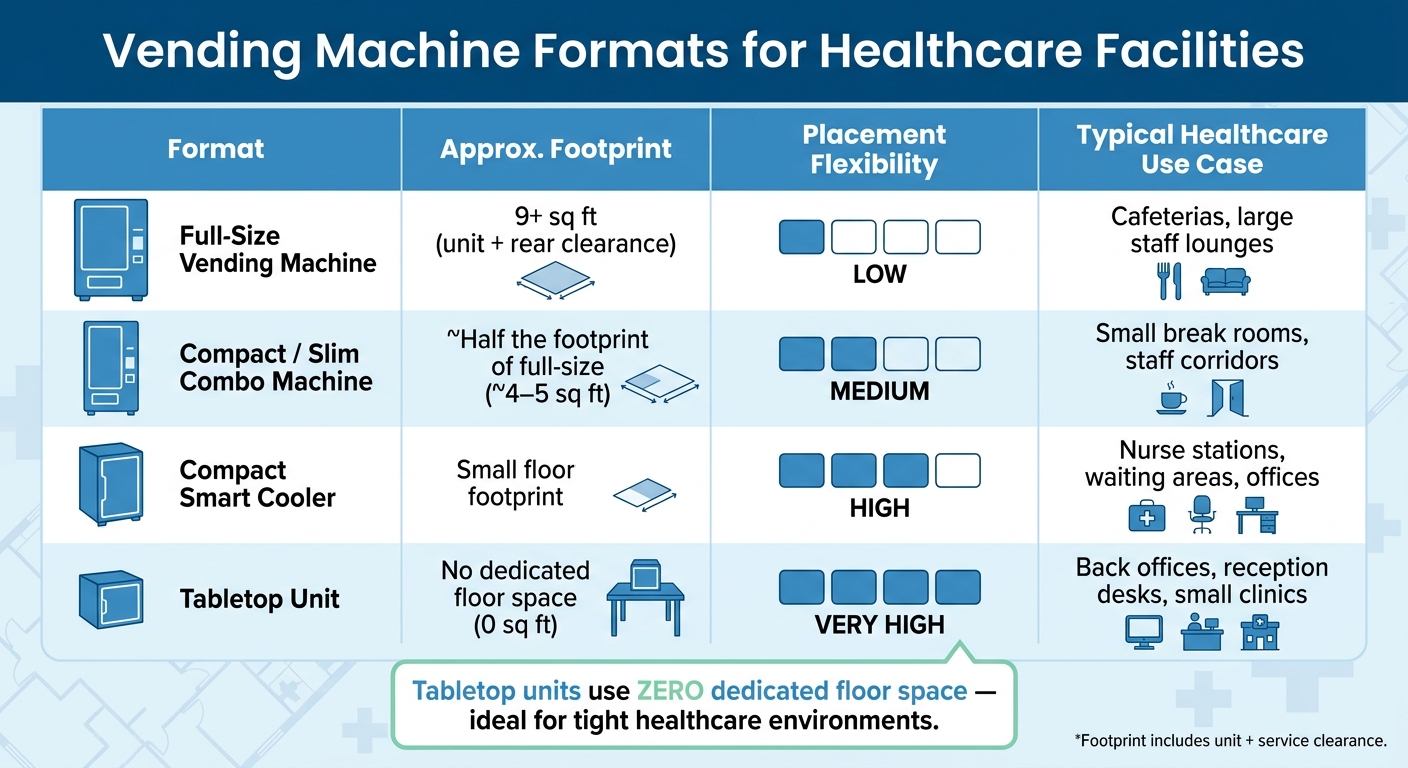
Full-Size vs. Compact Vending: Footprint Comparison
Compact and slim units take up much less floor space, which makes them a better fit for tighter locations like alcoves and hallway ends. Tabletop units go one step further by using existing counter space instead of any dedicated floor space.
| Format | Approx. Footprint | Placement Flexibility | Typical Healthcare Use Case |
|---|---|---|---|
| Full-size vending machine | 9+ sq ft (unit + rear clearance) | Low | Cafeterias, large staff lounges |
| Compact / slim combo machine | About half the footprint of a full-size unit | Medium | Small break rooms, staff corridors |
| Compact smart cooler | Small footprint | High | Nurse stations, waiting areas, offices |
| Tabletop unit | No dedicated floor space | Very high | Back offices, reception desks, small clinics |
This kind of space savings matters most when a facility needs faster access without crowding shared areas. Those layout choices shape traffic flow, trip length, and day-to-day convenience.
Workflow and Outcomes From Better Vending Placement
Shorter Trips and Less Congestion
Space savings matter most when they also cut down staff travel and reduce traffic around care areas.
When vending is only available in a cafeteria or lobby, staff have to leave the unit just to grab a snack or drink. That adds extra walking, sends more people into hallways at the same time, and can crowd elevators during shift changes.
Put compact machines on nursing units or in nearby break rooms, and the day runs a bit smoother. Staff spend less time walking back and forth. Corridor traffic drops. Elevator bottlenecks ease up. In practical terms, saved square footage can turn into shorter trips and less congestion.
Health-Related Findings From Vending Interventions
Placement shapes both convenience and choice.
In healthcare settings, where time is tight and breaks can be short, machine location plays a big part in whether compact vending gets used at all. Studies on healthcare vending show the same pattern: assortment changes tend to work best when the machine is placed where staff already spend time.
That point matters. A better product mix can help, but it has more impact when access is close to the unit instead of tucked away in a distant common area.
Centralized vs. Distributed Vending: Metrics Comparison
The comparison below shows how those differences play out in daily operations.
| Factor | Centralized Vending | Distributed Compact Vending |
|---|---|---|
| Walking distance | Longer – requires leaving the floor | Shorter – machine is on or near the unit |
| Off-hours coverage | Limited if cafeteria closes | Access remains available after cafeteria hours |
| Congestion risk | Higher during shift changes and peak meal times | Lower – traffic is spread across units |
| Assortment | One standard mix facility-wide | Can be tailored by location |
| Access time | Lower – more travel required | Higher – access is closer to where people work |
Applying the Findings With AI-Powered Managed Vending
Why AI-Powered Compact Vending Works for Healthcare
Compact vending works best when it’s placed close to demand and kept simple to run. AI-powered systems help by adding remote inventory tracking, cashless payment, and location-based assortment control.
Based on the space and placement findings above, the next step is figuring out how to keep compact machines stocked and efficient without adding extra work for facility staff. Remote inventory tracking makes that easier. It supports compact placement in smaller, harder-to-serve spots because staff don’t need to do manual stock checks. Cashless payment helps keep transactions fast and low-touch. And product mix can change by location, so each machine can match the needs of that specific area.
That makes managed compact vending a good fit for busy healthcare settings.
MotoSnax Vending for Hospitals, Clinics, and Medical Offices
MotoSnax Vending offers fully managed AI-powered vending solutions at no cost to the facility. Installation, maintenance, restocking, and real-time inventory management are all included. Its smart coolers, traditional machines, and combo units fit break rooms, waiting areas, and narrow corridors.
This is where fully managed service makes a difference. For healthcare properties in New York and Connecticut, MotoSnax handles every part of the service, so facilities get a reliable vending option without adding more operational work for staff.
Key Findings for Facility Decision-Makers
The main takeaway is simple: compact, AI-managed vending can improve access while cutting labor and space demands. The findings point to three clear conclusions:
- AI inventory management helps keep small-footprint machines stocked without manual oversight
- Location-specific assortment lets facility managers tailor product mix to each unit or area
- Fully managed service removes the operational burden from internal teams
For facility managers reviewing vending strategy, smaller machines placed closer to where people already are can improve convenience, space use, and access.
FAQs
How do I choose the right vending format for each care area?
Look at each area’s needs, who uses it, and how much space you have. Combo machines are a good fit for busy spots that need more variety without taking up extra room. Smart coolers make it easy for people to grab fresh food and drinks fast, with cashless checkout.
MotoSnax Vending can help choose the right equipment, put it in the best spot, and handle maintenance and inventory.
What should facilities check for ADA and hallway clearance before placement?
Before placement, facilities should confirm ADA compliance by making sure controls and coin slots are within wheelchair reach. They should also check that the machine doesn’t block hallway clearance, egress paths, or fire safety rules.
MotoSnax Vending works with facilities directors to review floor plans and help ensure proper, compliant placement.
How can compact vending reduce staff travel without disrupting workflow?
Compact vending machines cut down on staff travel by putting snacks, drinks, and day-to-day supplies right in busy clinical areas or break rooms. That means staff can stay closer to their units instead of walking off the floor to find what they need.
Space-saving smart coolers and combo machines offer 24/7 access without using much floor space. MotoSnax Vending supports this with fully managed, AI-powered machines and real-time inventory monitoring.